


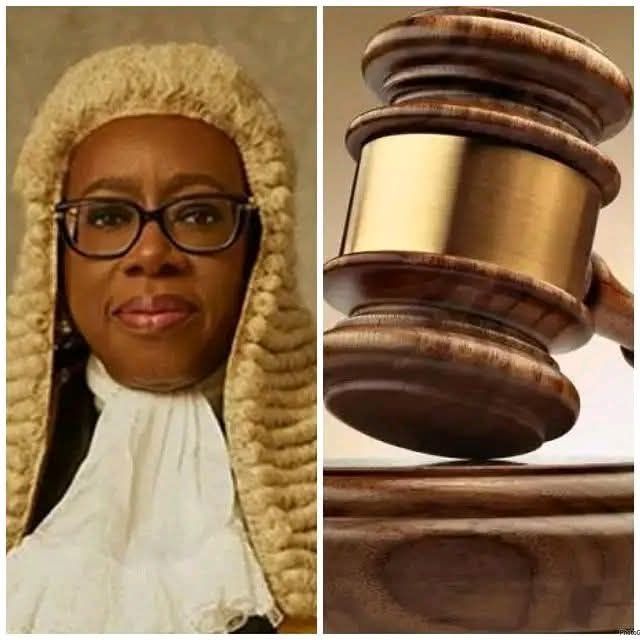
Mr. Sunday Jackson, a farmer from Adamawa State, has been sentenced to death by hanging for killing a Fulani herdsman in what many are calling an act of self-defense gone tragically awry.
The Supreme Court has upheld the lower court, Adamawa High Court, Yola’s ruling, cementing Jackson’s fate and igniting a passionate plea for clemency from supporters who view the sentence as a grave injustice.
The incident occurred in 2014 when Mr. Jackson, working on his farm, was attacked by a Fulani herdsman wielding a knife.
According to trial details, Mr. Jackson sustained injuries to his legs during the assault.
In a desperate struggle, Jackson managed to overpower his assailant, seizing the knife and stabbing the herdsman, who later succumbed to his injuries.
However, in a gross travesty of justice, Jackson was sentenced to death in 2021 after being in prison for seven years.
The prosecution acknowledged during the trial that the knife belonged to the attacker, a fact that has fueled arguments that Jackson acted to protect his own life.
But, the trial court led by Justice Fatima Ahmed Tafida ruled that Jackson should have fled the scene after disarming his attacker rather than using the weapon against him.
Despite the clear context of self-defense, the court convicted Jackson of murder, sentencing him to de@th by hanging.
Regrettably, the Supreme Court has now upheld Jackson’s death sentence ten years after.
The Supreme Court’s decision to uphold the lower court’s verdict on Mr. Jackson has left many questioning the application of justice in this case, with critics arguing that the ruling fails to account for the immediacy of the threat Jackson faced.
“This is clearly a case of persecution,” said a Rights activist. “Sunday Jackson was defending his life against an armed attacker. To sentence him to death for that is a miscarriage of justice that demands urgent attention.”
