


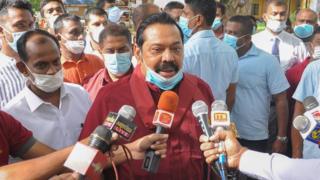
 Image copyright EPA
Sri Lankan President Gotabaya Rajapaksa has declared victory in the country’s parliamentary election.
His brother Mahinda Rajapaksa is expected to be installed as prime minister, having held the role as caretaker since November.
The brothers’ party, Sri Lanka People’s Front, is approaching the two-thirds “super majority” of seats needed to carry out its promised constitutional changes.
The final tally is due early on Friday.
Mahinda Rajapaksa earlier tweeted that Indian Prime Minister Narendra Modi had already called to congratulate him.
The controversial Rajapaksa family has dominated Sri Lankan politics for two decades. Mahinda Rajapaksa was previously president, from 2005 to 2015.
Sri Lanka has been one of the few nations to hold an election despite the coronavirus pandemic. The vote had already been postponed twice because of the virus.
The country has had relatively few confirmed infections and deaths of coronavirus – with a total of 2,839 cases and 11 deaths.
Another victory for controversial brothers
By BBCSouth Asia AnalystAnbarasan Ethirajan
Once again it’s a huge victory for the Rajapaksa brothers.
Just nine months after his impressive win in the presidential election, Gotabaya Rajapaksa has led his Sri Lanka People’s Front close to a two-thirds majority.
He is hugely popular among the majority Sinhala masses for crushing the Tamil Tiger separatist rebels in 2009 when he was the defence secretary. Many in the country also credit his administration for bringing stability and successfully containing the coronavirus outbreak.
Gotabaya Rajapaksa is accused of human rights abuses during the civil war and also of targeting those who dissented. He denies all the charges.
A rise in Sinhala majoritarian nationalism in the run up to the election has also worried minority communities. Muslim leaders regret that their entire community is being vilified following the devastating Easter Sunday suicide attacks by Islamist militants last year, which killed more than 260 people.
With their dominant majority, the Rajapaksas could attempt to change the constitution, increase the powers of the president and reverse the work of the previous government.
Activists, who are already alarmed by the reducing space for dissent and criticism, fear if that happens, it could lead to greater authoritarianism.
Click Here to Visit Orignal Source of Article https://www.bbc.co.uk/news/world-asia-53688584
