


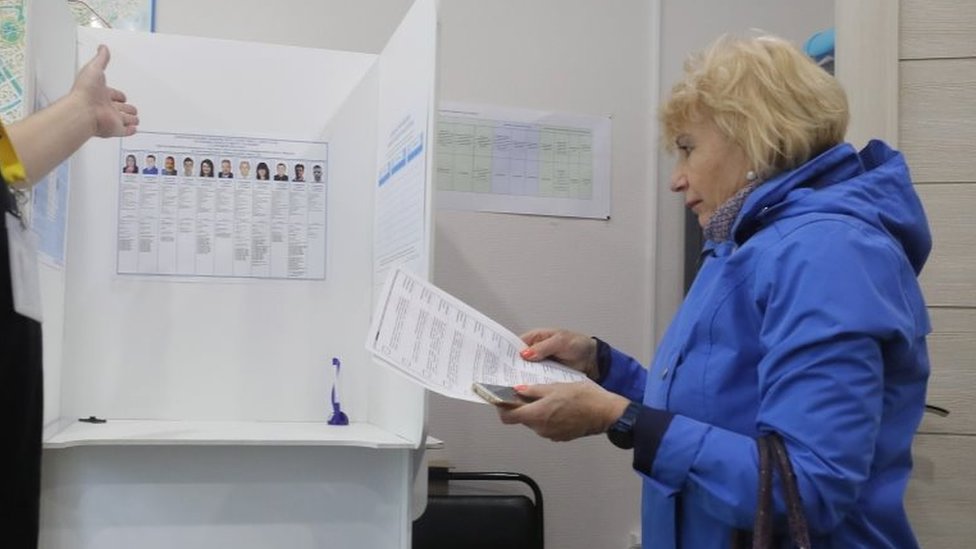
 image copyrightEPA
Voters across Russia are casting their ballots in dozens of local elections that are seen as a big test for the ruling pro-Kremlin United Russia party.
Nearly 160,000 candidates are vying for seats in local parliaments. Governors are also being elected in many regions.
The polls come only weeks after the suspected poisoning of opposition leader Alexei Navalny with Novichok.
His team allege this was done on the orders of President Vladimir Putin – the Kremlin denies any involvement.
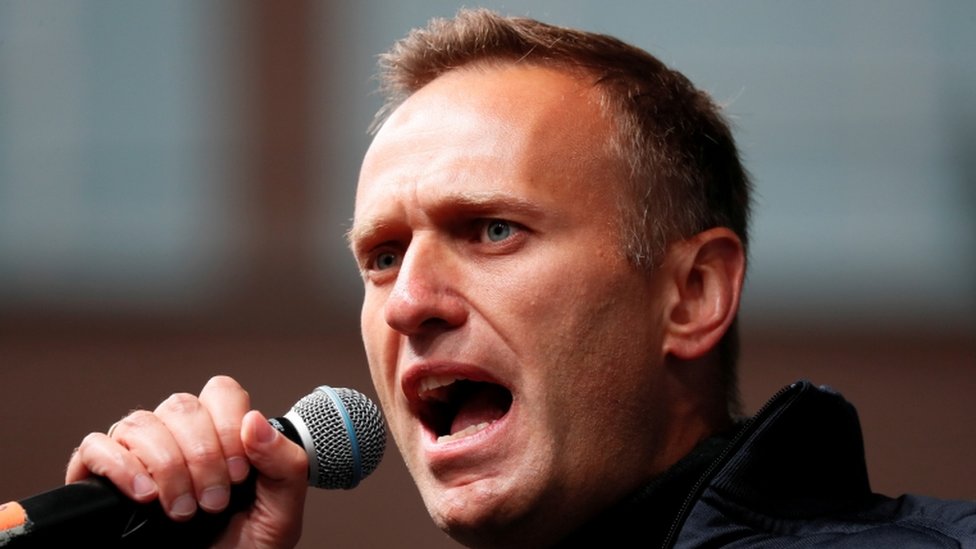
Mr Navalny had been backing key challengers to United Russia, describing it as the “party of crooks and thieves”.
His team have been urging Russians to vote tactically to channel support towards candidates best placed to defeat United Russia.
In some places, these are people affiliated with Mr Navalny himself, while in other regions they are communist or nationalist challengers, the BBC’s Sarah Rainsford in Moscow reports.
Mr Navalny’s camp believes this campaign could be why he was attacked, our correspondent says.
She adds that United Russia has become increasingly unpopular, associated with a controversial pension reform, falling incomes – and corruption.
Russia’s electoral commission allowed early voting on 11-12 September because of the coronavirus outbreak.
But Sunday is the main day for tens of millions of voters across 11 time zones, with more than 56,000 polling stations prepared.
They are also seen as a dry run for elections to the national parliament next year.
The authorities were then accused of a heavy-handed response to the rallies, which saw some of more than 1,000 people arrested receive sentences of up to four years in prison.
Related Topics
Click Here to Visit Orignal Source of Article https://www.bbc.co.uk/news/world-europe-54135141
